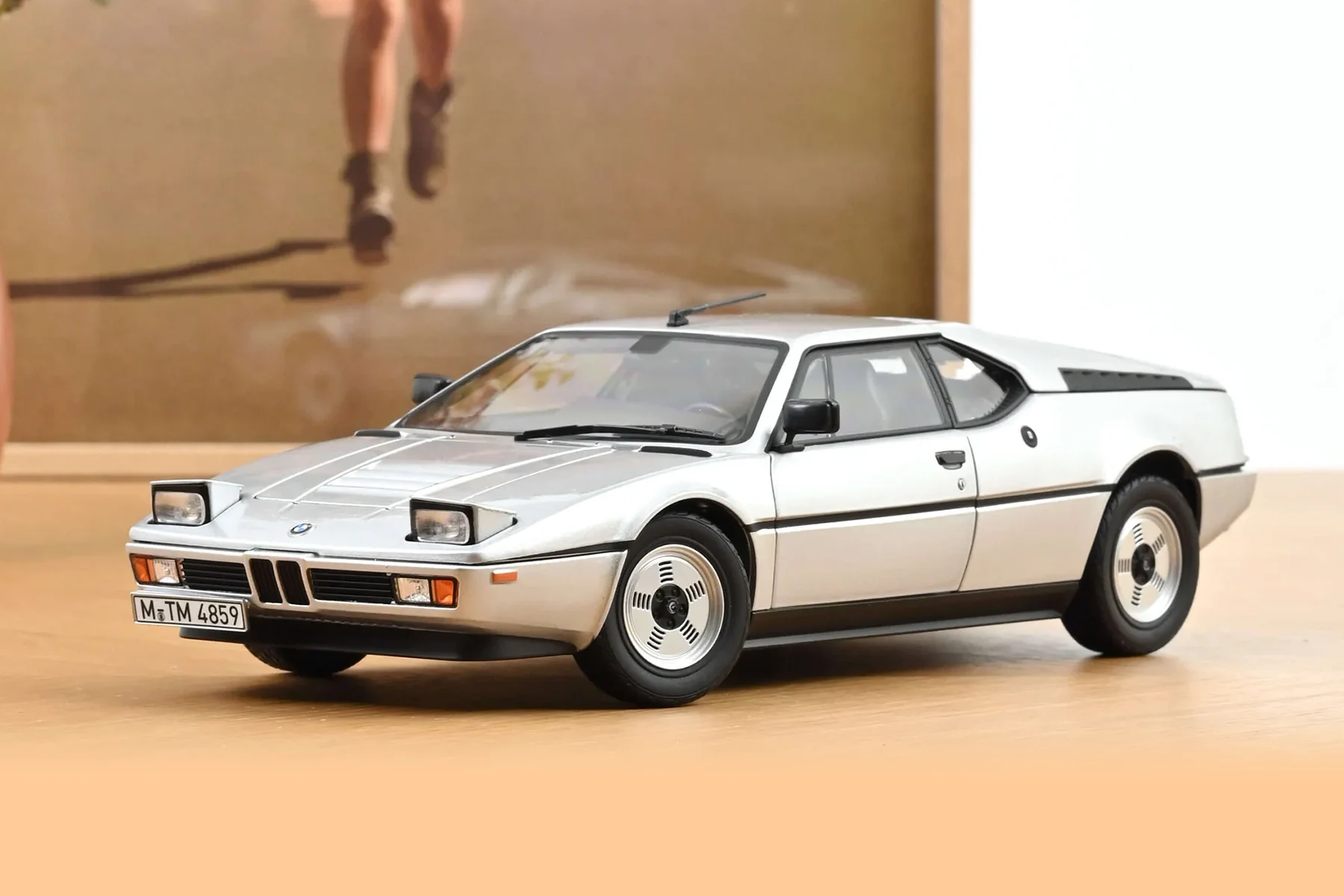
A great opportunity for Lamborghini
Yes, the BMW M1 was initially linked to Lamborghini. As it was a very short-run project, the Italian brand was chosen to carry it out. Despite the capital injection it received from the government and the production of several prototypes, BMW finally decided not to continue collaborating with Lamborghini, which was unable to overcome its own crisis.
Fortunately, a nearby company called ItalEngineering (formed by former Lamborghini employees) took the project over and manage the manufacturing phase of the M1.
An illustrious origin
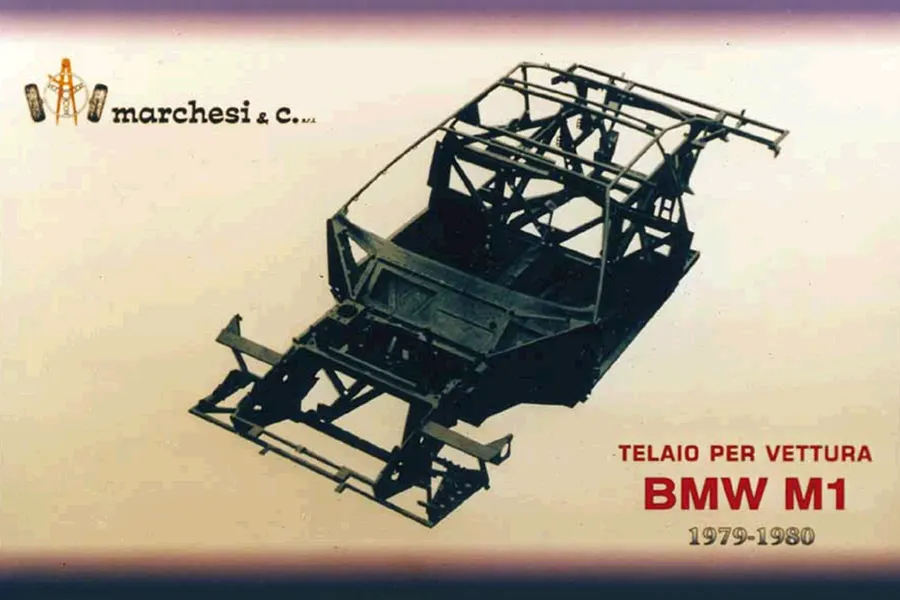
Project E26/1 (as it was known) started production in the capital of Italian sports cars: Modena. It is no coincidence that, having been partially developed by Lamborghini there, some of its suppliers were located in the vicinity of this city. In the case of Marchesi & C., which was responsible for manufacturing the chassis, it had already performed this task on the Lamborghini Countach project. For the fibreglass bodywork, the services of T.I.R. (Trasformazione Italiana Resina) were enlisted, based also in Modena.
First stage: Italdesign
The renowned Turin-based coachbuilder was responsible for the initial assembly work. In fact, he vwas the man who designed the exterior of the BMW M1.
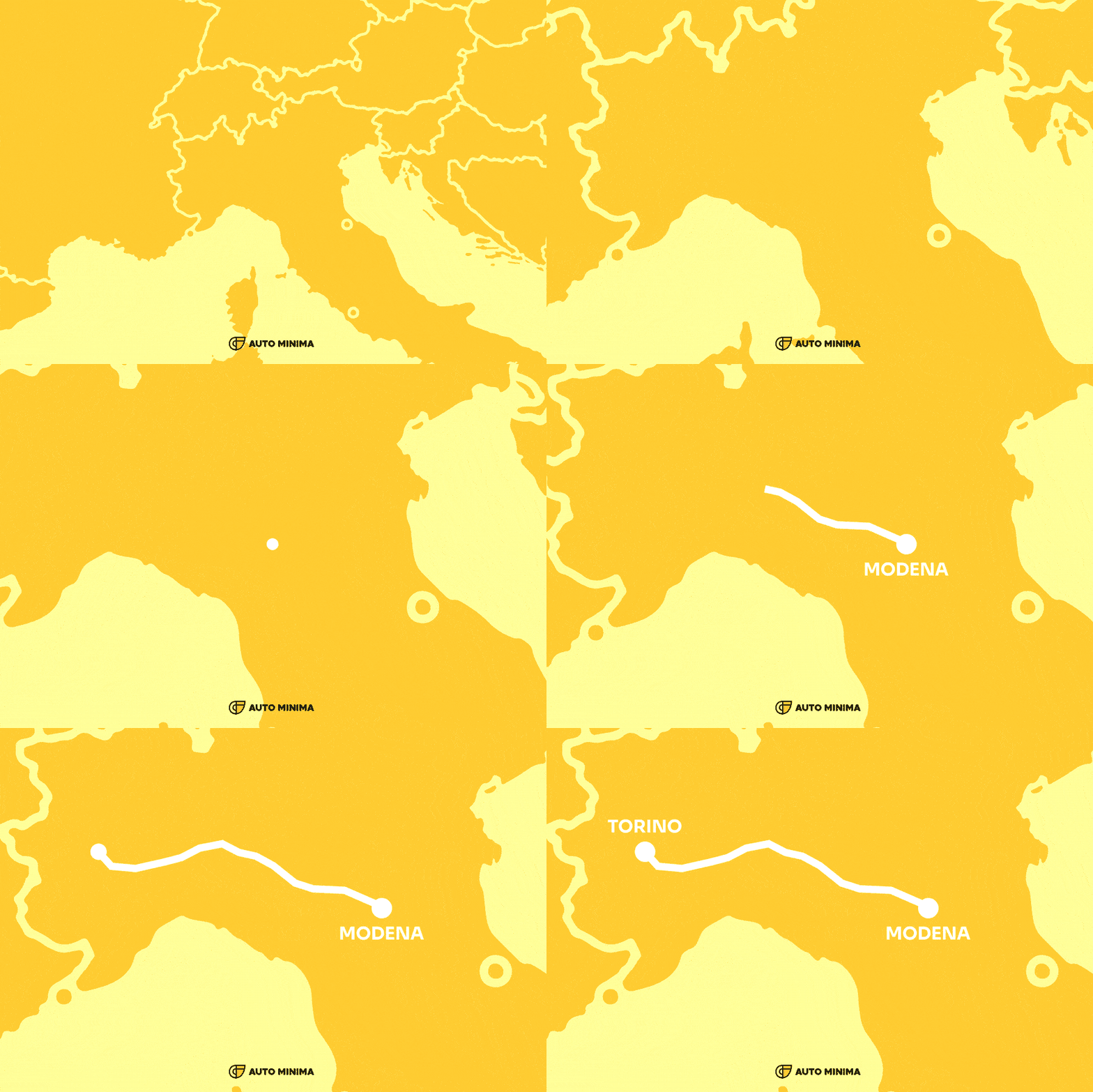
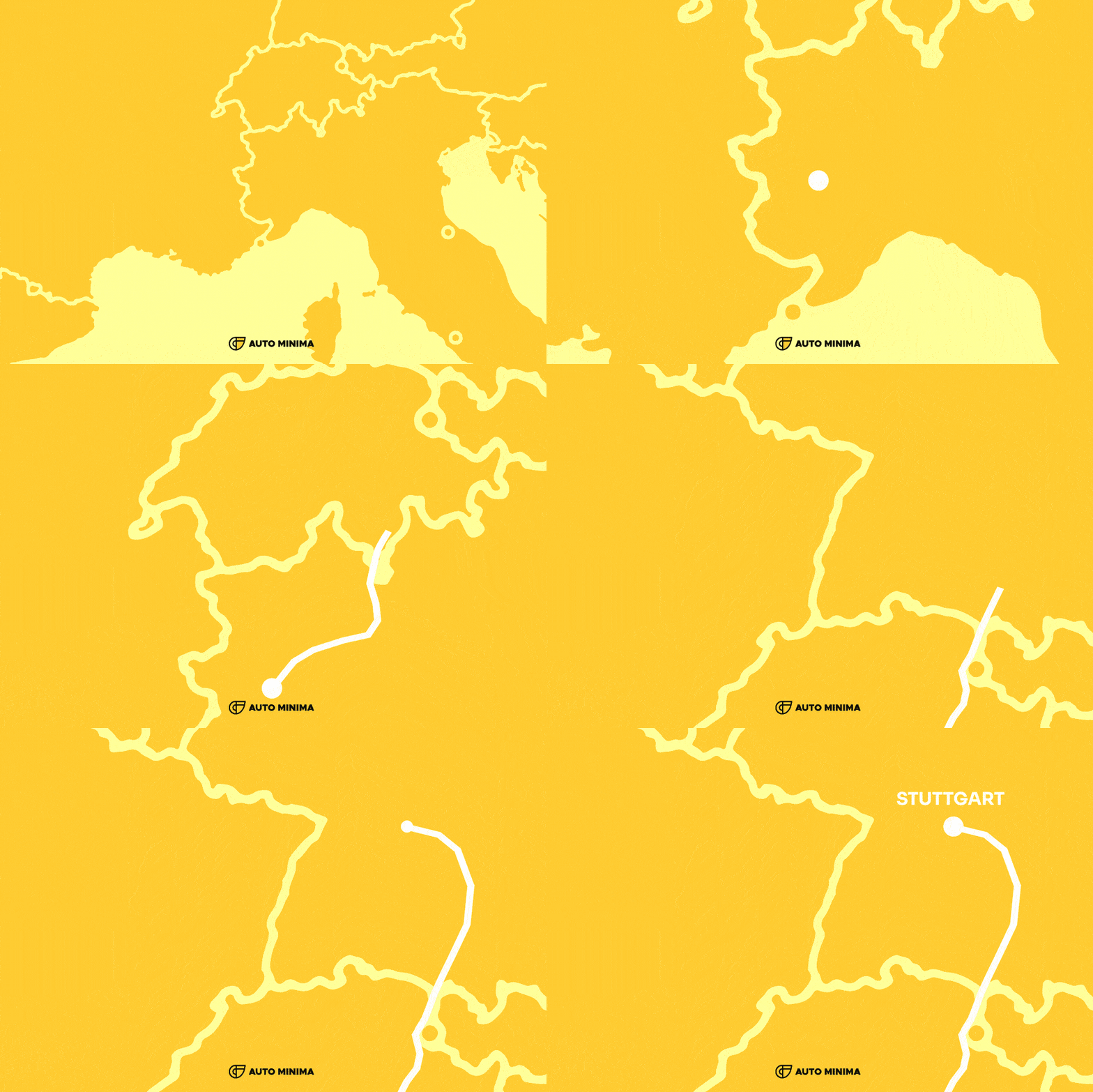
Italdesign received the chassis and bodywork separately. This is a 300 km journey between Modena and Turin that has connected the major Italian brands with their preferred coachbuilders for decades. In this case, the BMW M1 did so through a supervisor (the aforementioned ItalEngineering) who controlled the process while the car remained in Italy.
Once the goods arrived at Italdesign, the chassis was painted and the bodywork was glued onto it afterwards. All the necessary adjustments were also made before body painting was executed. Finally, the dashboard, electrical components and other interior elements were installed.
Second stage: Karosserie Baur
The German coachbuilder was responsible for finishing the car. It was a regular BMW collaborator, particularly in the manufacture of convertible versions of its models.
The M1 crossed the Alps in semi-assembled form and, after travelling more than 600 km, arrived at the Baur workshops in Stuttgart. There, all the mechanical parts were installed, including M1’s magnificent 6-cylinder engine (coded M88, which also came from the BMW Motorsport factory in Munich).
The M1 can be considered as much a German car as an Italian one.
The work at Baur took approximately one month, under the watchful eye of a team of BMW technicians who had been sent there. They were responsible for the final inspection and road tests in order to sign off each unit (453 cars in total).
Third stage: Munich
The M1s arrived at their final destination (BMW headquarters in Munich) after a journey of around 220 km in a car transporter. After a final inspection, they were delivered to their lucky owners at the ‘M’ dealership of their choice.
This was the journey that every M1 did during its manufacturing between 1979 and 1980. Thus, after a turbulent development and production phase, it was finally delivered to customers and showed its potential in the M1 Procar championship.
Source: bmw-m1-club.com